




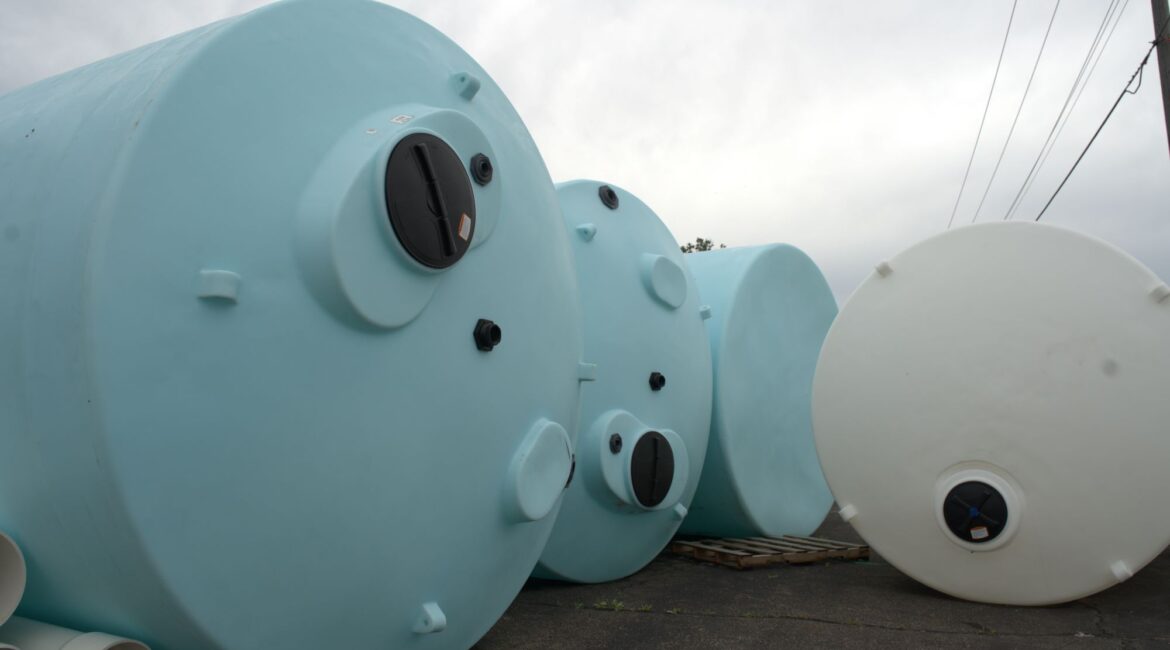
When standard tanks don’t meet your chemical, temperature, or footprint requirements, custom plastic tank fabrication becomes essential. For engineers and project managers working in corrosive environments, choosing the right material and fabrication method directly impacts system performance, safety, and lifespan.
At Indelco, custom tanks are engineered around your process—not forced into off-the-shelf limitations.
When Do You Need a Custom Tank?
Custom fabrication is typically required when:
- Chemical compatibility exceeds standard material limits
- Tank dimensions must fit tight or irregular footprints
- Integrated fittings, baffles, or supports are required
- Regulatory or secondary containment requirements apply
- Temperature or pressure conditions exceed molded tank capabilities
If your system includes aggressive chemicals or precise process control, custom fabrication is often the safer long-term investment.
Thermoplastic Materials: What to Choose and Why
Material selection is the foundation of tank performance.
Common materials include:
- Polypropylene (PP)
Excellent chemical resistance, widely used for acid and alkaline storage - High-Density Polyethylene (HDPE)
Cost-effective, strong impact resistance, ideal for large-volume storage - PVC (Polyvinyl Chloride)
Good for moderate chemical environments and lower temperatures - PVDF (Polyvinylidene Fluoride)
High-performance option for aggressive chemicals and elevated temperatures
The key rule: the material must match the chemistry, not just the budget.
Fabrication Methods That Impact Performance
Custom tanks are typically fabricated using:
- Thermoplastic welding (butt, extrusion, hot gas)
- Sheet fabrication and structural reinforcement
- Integrated nozzle and fitting installation
- Leak testing and QA validation
A properly fabricated tank ensures:
- Structural integrity under load
- Consistent wall thickness
- Long-term resistance to chemical attack
What Information You Need Before Requesting a Quote
To avoid delays and ensure accuracy, be ready with:
- Chemical composition and concentration
- Operating temperature range
- Tank dimensions and orientation
- Required fittings, ports, and accessories
- Installation environment (indoor/outdoor, structural constraints)
Providing this upfront allows fabrication teams to engineer the right solution—not just price a guess.
Why Custom Fabrication Beats Molded Alternatives
| Factor | Custom Fabricated | Molded Tank |
| Design flexibility | High | Limited |
| Chemical compatibility | Fully customizable | Limited |
| Lead time | Moderate | Fast |
| Long-term performance | High | Application dependent |
For critical systems, custom fabrication delivers better lifecycle value.
Need help specifying a custom tank?
Work with Indelco to design a tank built for your exact process conditions.