




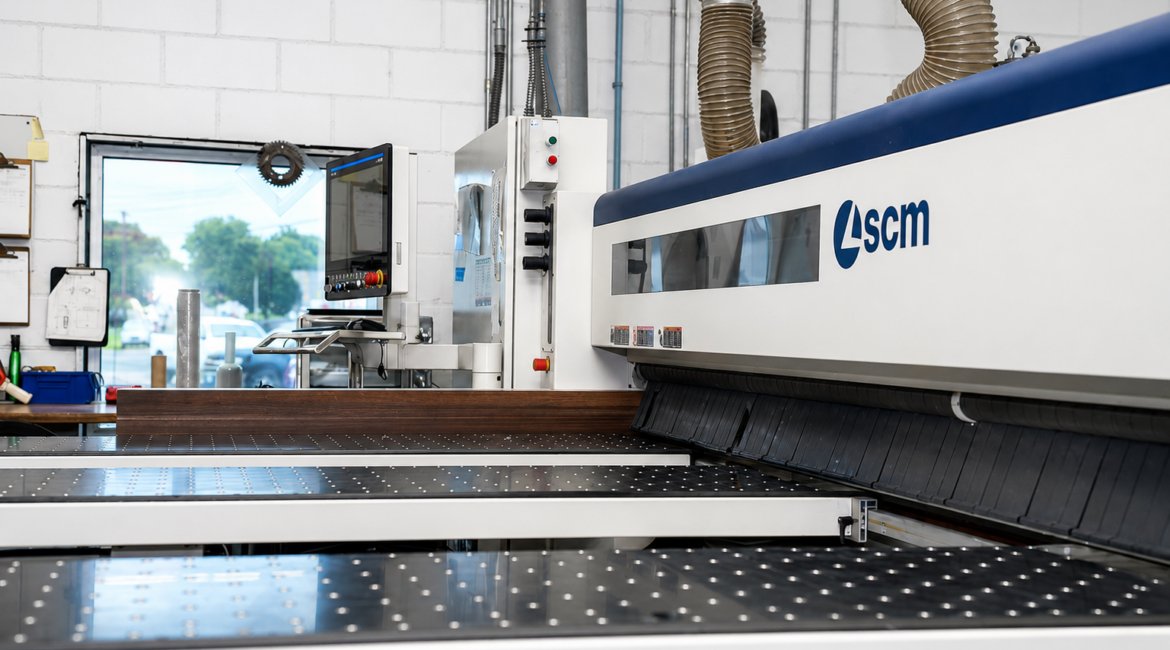
CNC machining plays a critical role in creating precision thermoplastic components for fluid handling, chemical processing, and corrosion-resistant systems. While machining metals is well understood, thermoplastics behave very differently — and those differences directly impact tolerances, surface finish, and long-term performance.
Understanding how thermoplastics machine — and how to properly specify parts — helps engineers avoid distortion, premature failure, and unnecessary redesign.
Indelco provides CNC machining for thermoplastics used in piping systems, valve manifolds, chemical handling assemblies, and custom fluid handling components.
Why Machining Thermoplastics Is Different Than Metals
Thermoplastics respond to cutting forces and heat very differently than metals. Without proper machining practices, parts can warp, melt, or fail to hold tolerance.
Key differences include:
- Lower melting temperatures
- Higher thermal expansion
- Greater flexibility under load
- Reduced rigidity compared to metals
- Sensitivity to tool pressure and feed rates
These characteristics require adjusted speeds, sharp tooling, and controlled machining environments.
Unlike metals, removing too much heat too quickly — or not enough — can affect dimensional accuracy.
Common Thermoplastics Used in CNC Machining
Material selection depends on chemical exposure, temperature, and mechanical requirements.
PVC (Polyvinyl Chloride)
- Good chemical resistance
- Cost-effective
- Easy to machine
- Common for fluid handling components
CPVC
- Higher temperature capability than PVC
- Good chemical compatibility
- Used in industrial piping systems
Polypropylene (PP)
- Excellent chemical resistance
- Lightweight
- Good for tanks and process systems
- Requires careful machining to avoid deformation
PVDF
- High-performance thermoplastic
- Excellent chemical resistance
- Higher temperature capability
- Ideal for aggressive chemical environments
Each material machines differently and requires adjusted tooling strategies
Components Commonly CNC Machined from Thermoplastics
CNC machining is used to produce precision components such as:
- Valve manifolds
- Custom adapters
- Pump connection plates
- Distribution blocks
- Instrument mounting panels
- Custom flanges
- Equipment interface plates
- Chemical injection components
These parts are often used in corrosive environments where metal components would degrade.
CNC Machining for Fluid Handling Systems
Precision machining allows components to integrate seamlessly into piping systems. Machined thermoplastic parts are commonly used in:
- Chemical dosing systems
- Corrosion-resistant piping networks
- Water treatment equipment
- Semiconductor processing systems
- Industrial manufacturing lines
- Data center liquid cooling systems
Machined manifolds and distribution blocks allow controlled flow paths while maintaining chemical compatibility.
Tolerance Considerations When Machining Thermoplastics
Holding tight tolerances in thermoplastics requires planning.
Factors affecting tolerance include:
- Material expansion during machining
- Temperature changes during operation
- Clamping pressure during cutting
- Wall thickness variation
- Stress relief after machining
Because of this, tolerances for thermoplastics are often slightly different than metals — especially on larger components.
Working with a machining partner familiar with thermoplastics ensures realistic tolerance expectations.
Surface Finish and Sealing Performance
Surface finish is especially important for fluid handling components.
Machined surfaces impact:
- O-ring sealing
- Gasket compression
- Leak prevention
- Flow performance
Improper machining can leave tool marks or uneven sealing surfaces that cause leaks.
Proper tooling and finishing ensure sealing surfaces remain consistent.
Machined vs Fabricated Thermoplastic Components
Some components can be fabricated, while others must be machined.
Fabricated Components
- Tanks
- Ductwork
- Piping assemblies
- Structural enclosures
Machined Components
- Manifolds
- Adapter plates
- Precision flanges
- Valve bodies
- Custom fittings
Many systems combine both fabricated and machined components for optimal performance.
When CNC Machining Is the Right Choice
CNC machining is typically used when:
- Tight tolerances are required
- Complex geometries are needed
- Multiple ports or flow paths exist
- Precision sealing surfaces are necessary
- Custom equipment interfaces are required
Machining enables repeatable production and consistent performance.
How to Specify Machined Thermoplastic Components
To ensure accurate machining, provide:
- Material preference (PVC, PP, PVDF, etc.)
- Operating temperature range
- Chemical exposure
- Required tolerances
- Surface finish requirements
- Connection sizes and porting
- Quantity (prototype vs production)
Even basic information helps determine machining strategy.
Benefits of CNC Machining Thermoplastics
CNC machining provides:
- High dimensional accuracy
- Repeatable production
- Complex geometry capability
- Excellent chemical compatibility
- Lightweight components
- Corrosion resistance
These advantages make thermoplastics ideal for demanding fluid handling environments.
CNC Machining for Corrosion-Resistant Systems
In corrosive applications, machined thermoplastics offer significant advantages over metals:
- No corrosion or rust
- Reduced maintenance
- Longer service life
- Lower weight
- Easier modification
This makes machined thermoplastic components ideal for chemical processing and fluid handling systems.
Work With a Machining Partner That Understands Thermoplastics
CNC machining for thermoplastics requires experience with material behavior, tolerances, and application requirements. Properly machined components improve reliability and integrate seamlessly into larger fluid handling systems.
Indelco provides precision CNC machining for thermoplastics used in corrosive environments, fluid handling systems, and custom engineered assemblies. Let’s talk about your needs.